ScriptX

The tools we got tired of not having.

Every one of these started as a problem we hit shipping someone else’s streaming app — the device shelf, the bug report nobody could reproduce, the fourth time building the same catalogue screen. We built the fix, then kept building it.

VibeView

Every device your app ships to, running in a browser tab.

iOS and Android simulators, Apple TV and Android TV, streamed into any browser at 30 frames a second. A real Roku joins them over HDMI, because Roku has no simulator to run. No device shelf, no local Xcode, no waiting for a free machine.

  • iOS · Android · tvOS · Android TV · Roku
  • H.264 over WebSocket
  • SDK, API and CI
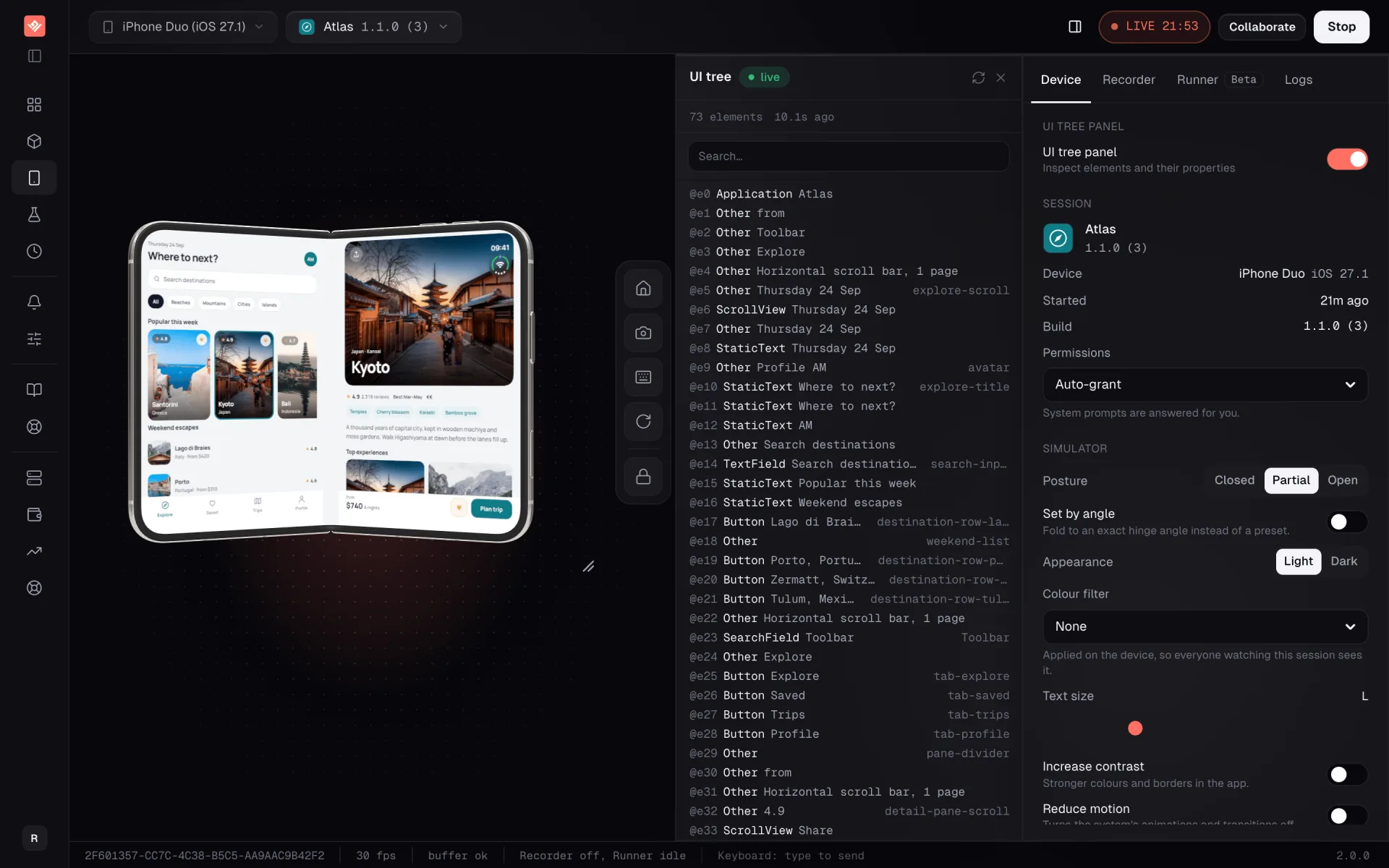
A VibeView session in the browser, streaming at 30 frames a second. On the left, a foldable iPhone simulator, half open, runs a travel app called Atlas, with its search on one pane and a Kyoto destination page on the other. Beside it, the live UI tree lists the 73 elements on screen, each with its type and label. On the right, the device panel shows the session and the settings a tester can change on the device: permissions answered automatically, fold posture, light or dark appearance, colour filter, text size, contrast and reduced motion.

Everframe

Bug reports that arrive already answered.

An in-app bug-reporting SDK and ingest service, live at everframe.dev. A user presses a button or a hotkey, draws a box on the screenshot and types a sentence. What lands is the whole scene: annotated screenshot, session replay, console, network, the focused component and device metadata — signed, and delivered to your own webhook or the Everframe dashboard, where a model triages it and an agent can turn it into a pull request.

  • iOS · Android · Web · 7 TV platforms
  • HMAC-SHA256 signed webhooks
  • Free tier · no card
A single Everframe report, being made and then opened. On the left, a browser at a checkout page with the Everframe “Report a bug” dialog open over it: a screenshot of the page with a red box drawn around the Place order button, the title “Place order does nothing”, a one-line description, a note that console, network and device info are attached, and a Send report button. On the right, the envelope that produced: a signed POST to the ingest endpoint carrying six layers — the annotated screenshot, a thirty-second replay ending on three taps of Place order, a console TypeError, a checkout request that returned 500, the focused PlaceOrderButton component, and the iPad’s device details — delivered to the customer’s own webhook with a 200, and to the dashboard, where triage suggested priority one.

Adelin

A streaming app, built by conversation.

Pick a concept, get a drafted app back, then refine it screen by screen with AI and a property editor while it renders live on a real device. Adelin writes the descriptor; a companion app built on React Native renders it on phones, TVs and the web from a single definition.

  • Portrait and landscape
  • SVOD · AVOD · TVOD
  • Builds and store submission
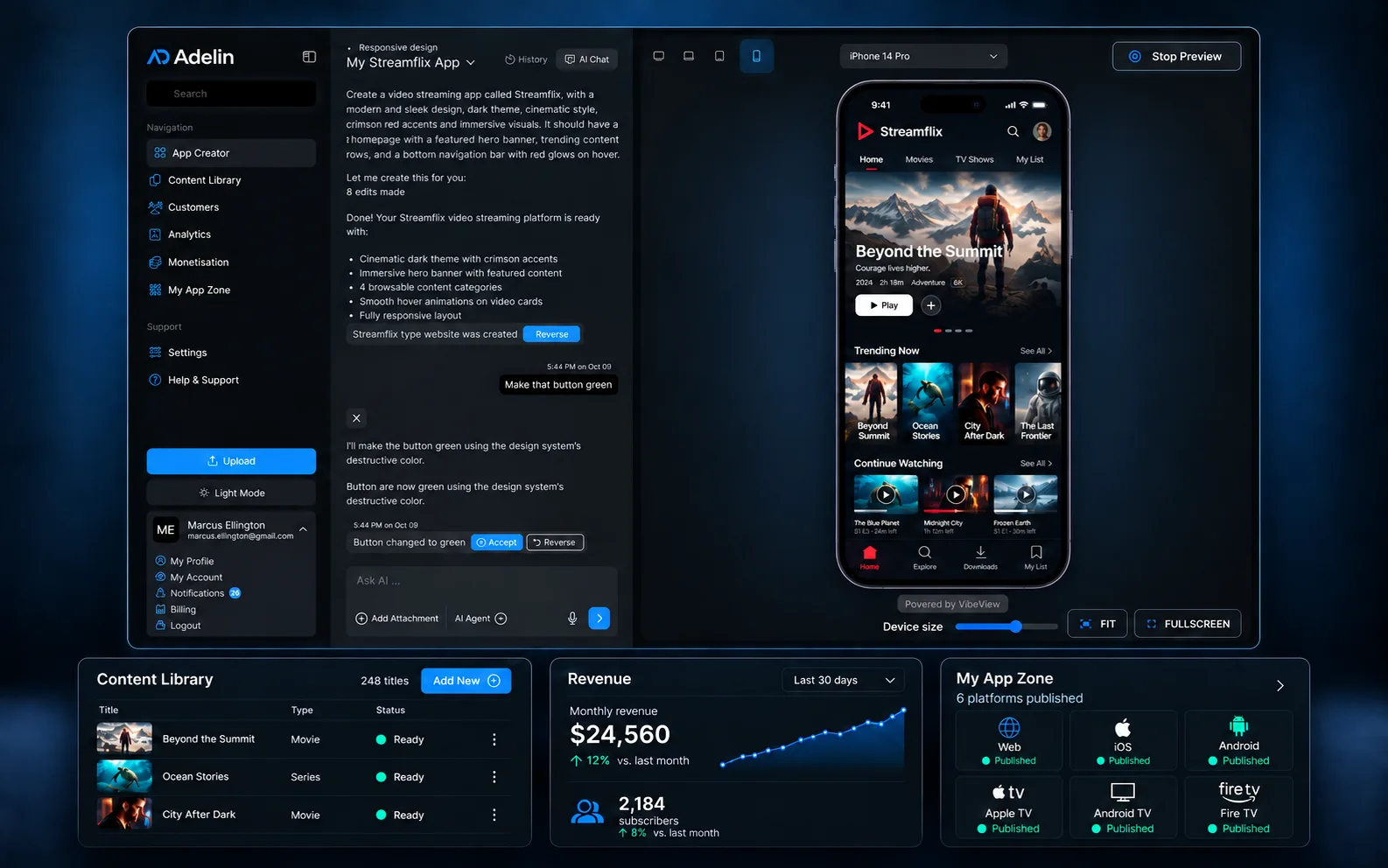
Adelin building a streaming app called Streamflix. On the left, the navigation: app creator, content library, customers, analytics, monetisation and My App Zone. In the middle, the AI chat where the app was described in a sentence, and a follow-up asking to make a button green, with the change offered to accept or reverse. On the right, the live preview on an iPhone 14 Pro: the Streamflix home screen with a featured title, a Trending Now rail and a Continue Watching rail. Below, three panels: the content library with titles marked ready, monthly revenue and subscribers, and the app marked published on web, iOS, Android, Apple TV, Android TV and Fire TV.

Tell us the idea. We’ll tell you what it takes.

Book a call