
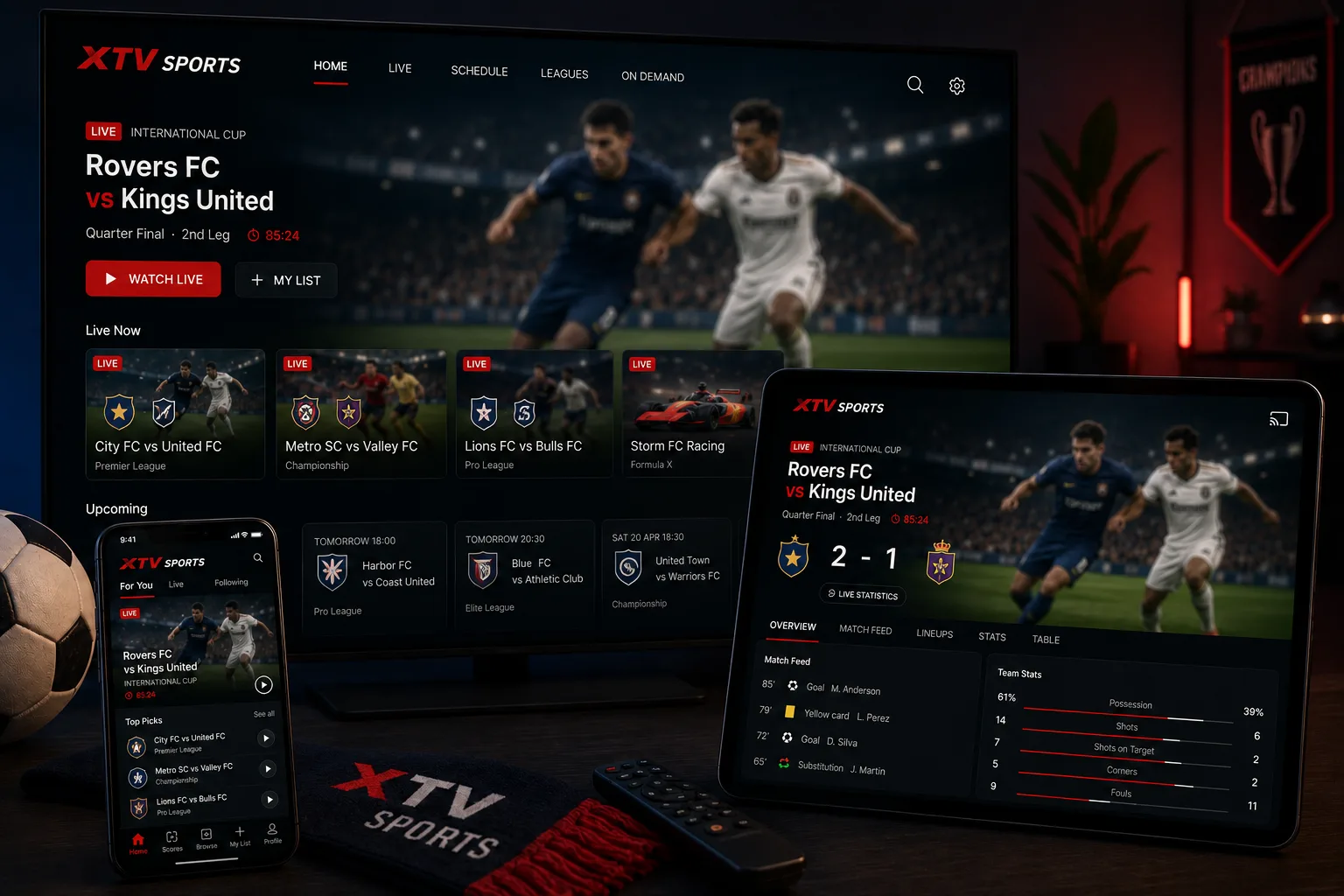
Solution
Live sports streaming apps
Built for the latency, the kickoff spike and the blackout rules a real match has.
- Decided first
- Latency target
- Peak concurrency
- Rights rules
- Built per platform
- Player
- Navigation
- Failover behaviour
- Not ours
- Encoding
- Distribution
- Rights agreements
Before kickoff, and after the whistle
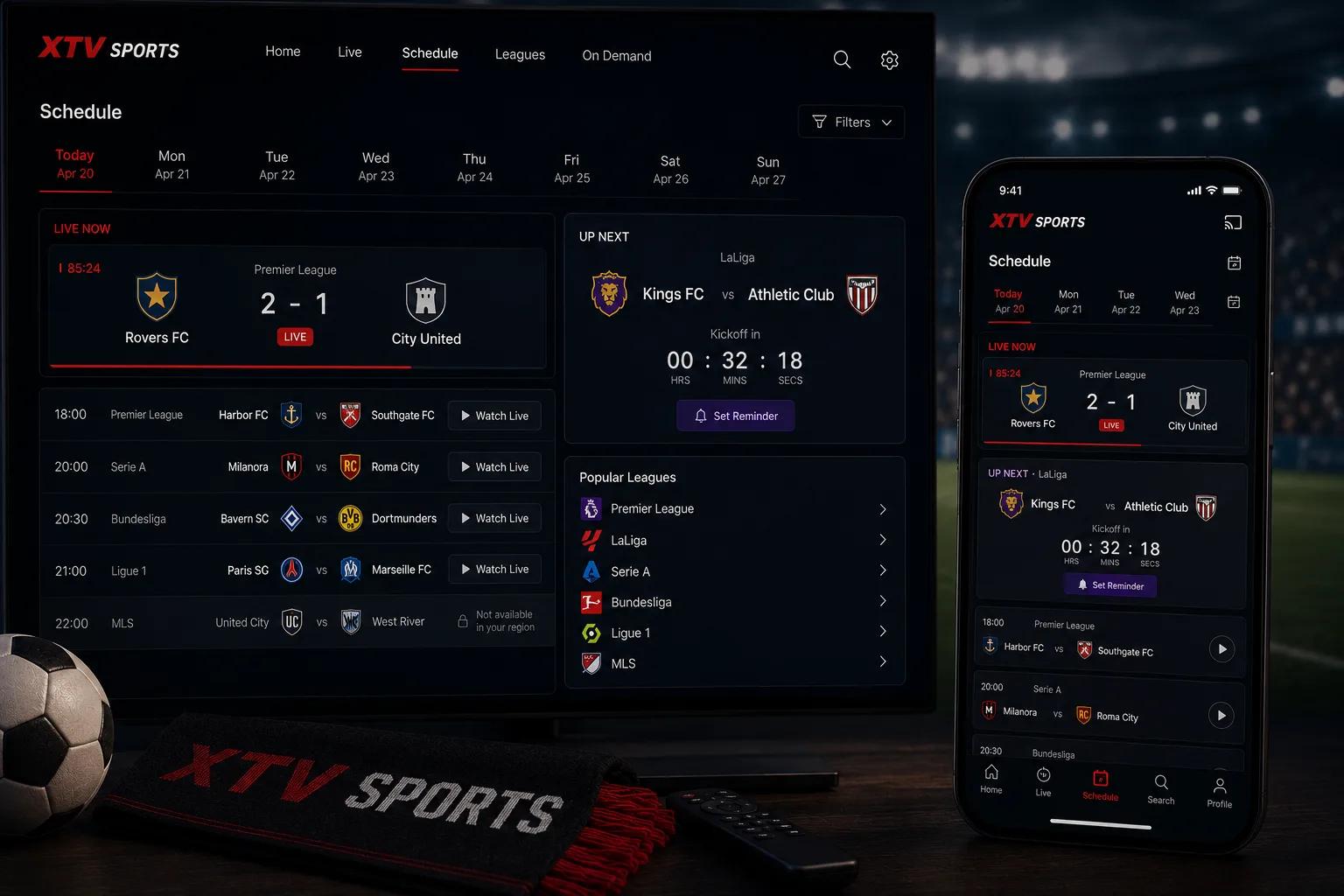
Before kickoff
The catalogue is a schedule rather than a library, so what a viewer sees depends on the time as much as on who they are. The countdown is the easy part. The fixture reading "not available in your region" is the hard one — blackouts and territories are rights work rather than a feature, and a rule you cannot verify is a rule you will breach eventually.
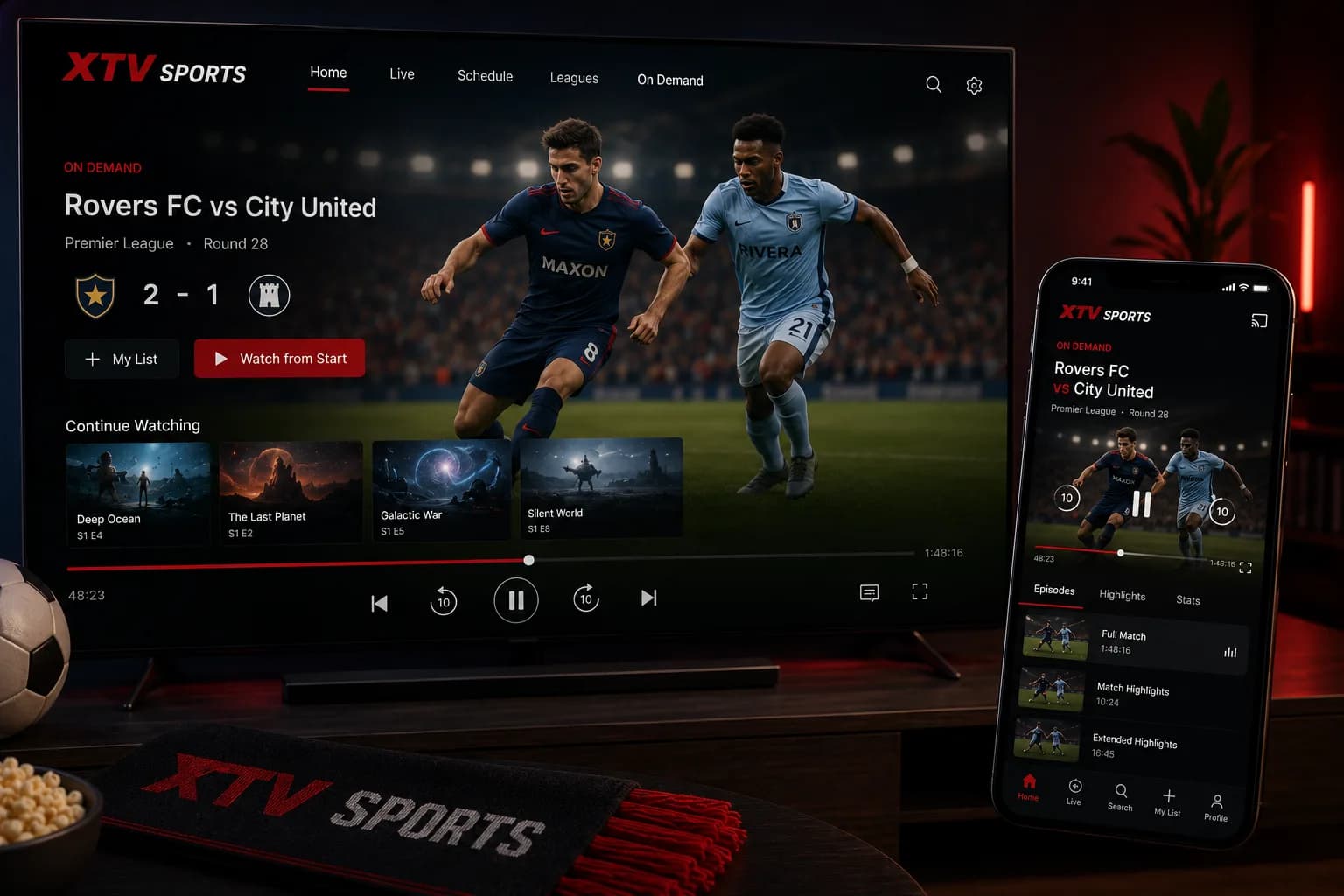
After the whistle
Everyone arrives at the same moment and everyone leaves at the same moment, and then the match has a second life as a replay and a highlights reel. That tail is a different load and often a different set of rights from the live window, and it is cheaper to decide before kickoff than the morning after.
What you get
- An app that holds its latency target on every platform in scope
- Sizing and behaviour built for the kickoff spike rather than the average
- Blackout and territory rules implemented so they can be verified and tested
- A decided fallback path, so failing during an event degrades rather than stops
- A rehearsal against a real fixture before launch, not after it
Typical timeline
3 to 6 months, driven by latency and concurrency requirements
Who this is for
Rights holders, leagues and broadcasters putting live sport in front of people who will not forgive it going wrong.
A sports app development company that has only shipped catalogue apps will describe this as the same job with a live stream added. It is not. Live sports streaming app development is a different job from an on-demand build, and the difference is not the player. It is that everything happens at once, to everyone, at a time you do not control, and it cannot be repeated. A catalogue app that has a bad afternoon loses some sessions. A match that fails at kickoff is on social media before the second half.
If your service is a library rather than a schedule, the on-demand build is the closer fit.
Live sports streaming app development
Starts with a fixture list and a kickoff time, which is a deadline no amount of planning can move.
Sports app development company
Starts with a shortlist of studios that have mostly shipped catalogue apps, and describe live as the same job with a stream added.
Low latency streaming app
Starts with a number somebody agreed casually, usually before anyone checked what it would cost to hold.
Sports streaming platform development
Starts with overlapping regional rights, where getting a blackout wrong is a breach rather than a bug.
What we deliver
An app that holds up on the one day it has to: at kickoff, on every screen, with the right people able to watch and the wrong ones not.
Most sports streaming platform development is decided in three places, all of them before anyone writes a screen. How much delay you can live with. How many people arrive in the same minute. And which of them your agreements let you serve, in which territory, at which time.
How the build runs
We start with the latency target and what it costs, because it drives everything downstream and because it is the number most often agreed too casually. A low latency streaming app is an architecture rather than a setting: lower constrains your delivery chain, your player, and sometimes your content protection choices.
Then we build for the spike rather than the average. On-demand load is a curve. Live load is a wall at kickoff, and a system sized for the average falls over on the day it matters. The last stage before launch is a rehearsal against a real event, because a live product that has never been live is untested however green the suite is.
Agree the latency target and its cost
It drives everything downstream and it is the number most often agreed too casually.
Size for the spike, not the average
On-demand load is a curve. Live load is a wall at kickoff, and the average tells you nothing.
Build the rights rules to be testable
Blackouts, territories and windows. A rule you cannot verify is a rule you will breach eventually.
Decide how it fails
To a lower quality, to another feed, to an honest message. Deciding in advance costs little and saves the day it is needed.
Rehearse against a real event
A live product that has never been live is untested, however green the suite looks.
What actually varies
We do not publish a price. Here is the more useful thing: what moves it.
| Driver | What it changes |
|---|---|
| Your latency target | The difference between a few seconds behind broadcast and near-real-time is a different architecture, not a setting. Decide it early and deliberately. |
| Peak concurrency | Sizing for kickoff, not for a Tuesday. What matters is the shape of the spike, and it is worth knowing your worst fixture before agreeing anything. |
| Rights complexity | Blackouts, territories and time windows. A single national competition is straightforward. Overlapping regional rights is genuinely hard and is where the risk sits. |
| Whether there is a fallback | Deciding in advance how to fail — to a lower quality, to a different feed, to an apology screen — costs a little and saves the day it is needed. |
One limit worth saying plainly, because it should change what you ask us for.
The app is not where most of your latency lives. How quickly a goal reaches a viewer is decided mostly by encoding and distribution, which is a different supplier and a different contract. We build the app to hold the target and we will tell you honestly when the number you want is not an app problem — which is more often than most vendors will admit before signing. If you are comparing one live streaming app development company against another, that is the question worth putting to each of them.
What we need from you
- Your latency target, and whether it came from a rights agreement or from a preference. The two are negotiable in very different ways.
- Your worst-case concurrency, taken from a real fixture rather than an average.
- Your rights rules in full: territories, blackouts, and any time windows.
- Who runs your encoding and distribution, because the three of us need to agree the target before it is promised to anyone.
You will be talking to the people doing the work, which matters most here because the honest early conversation is about what your latency number will cost you.
Common questions
How low can the latency go?
Low enough that nobody in the building hears the goal before your viewer sees it, which is the target that actually matters. The number is decided mostly by your delivery chain rather than by the app, so it is a conversation to have with whoever runs your encoding and distribution as well as with us.
What happens if it breaks during a match?
You cannot re-run the game, so the plan matters more than it does anywhere else in streaming. That means a fallback path decided in advance, a way to fail to a lower quality rather than to nothing, and someone on call who can act during the event rather than after it.
Can you handle blackouts and territory rules?
Yes, and it is worth treating as rights work rather than as a feature. Getting a blackout wrong is a breach of your agreement, not a bug, so the rules are built to be verifiable and testable rather than buried in the app.
How is this different from an on-demand app?
Everyone arrives at the same moment. On-demand traffic is a curve and live traffic is a wall at kickoff, which changes how the whole thing is built. The catalogue is also a schedule rather than a library, so what a viewer sees depends on the time as much as on who they are.
Related
Last updated